Black Mold Removal Service Toronto
- Home
- Black Mold Removal Service Toronto
24 Hrs - 7 Days/Week

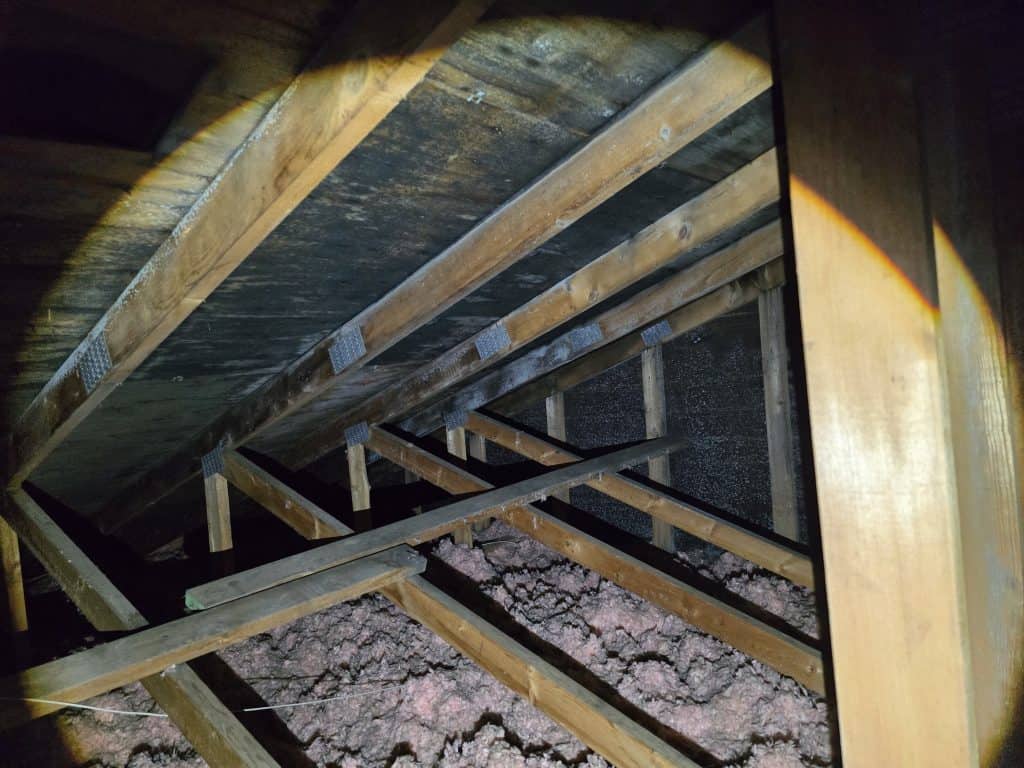
Black mold is the reason most people finally call. It is darker, it often smells, and it usually means moisture has been sitting somewhere long enough to feed it. Mold Remediation Toronto by FloodTech removes black mold across Toronto and the GTA with IICRC-certified technicians, full containment and post-clearance testing that proves the job is done.
If you can see it or smell it, call 647-956-6121. The inspection is free.

In everyday use, “black mold” usually means Stachybotrys chartarum — a dark, slimy-looking growth that needs sustained moisture, typically from a leak, flood or long-term condensation. But plenty of harmless moulds are also dark, and some genuinely problematic ones are not black at all. Colour alone does not tell you what you are dealing with, which is why identification matters before anyone starts removing material.
What is worth knowing: the response is the same either way. Any significant indoor mould growth needs the moisture source found, the affected material contained and removed, and the air verified afterwards. Guessing at the species from a photo does not change that, and it should never be the basis of a quote.
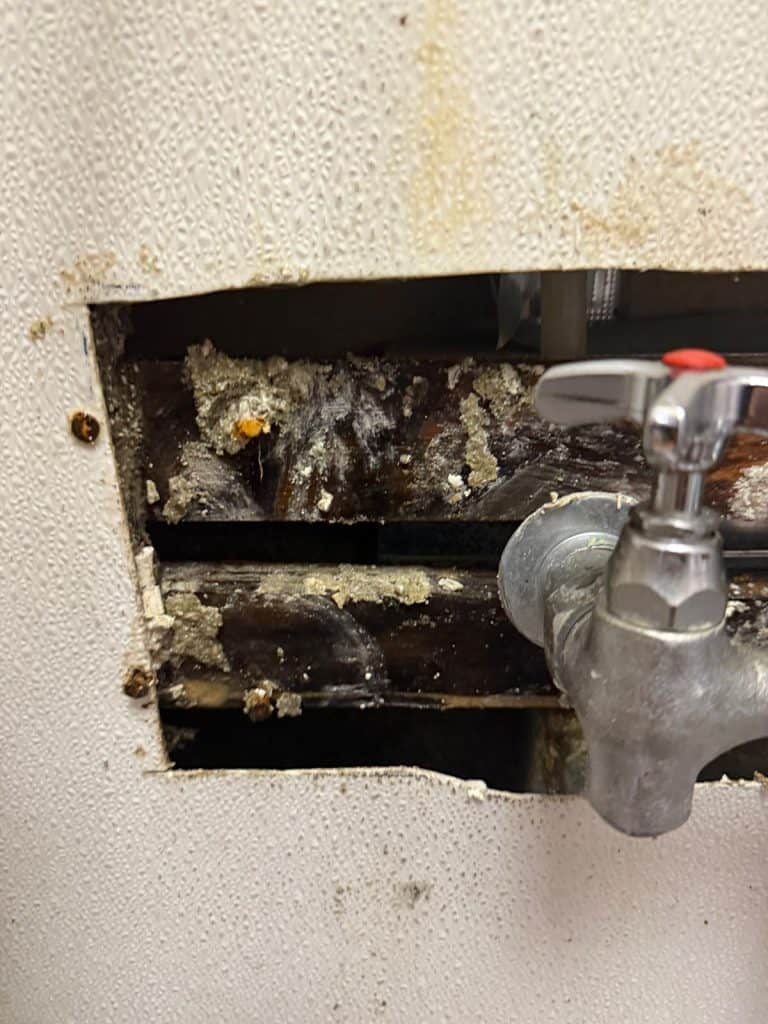
Bleach on a surface removes the colour and leaves the problem. Two things are actually required: the moisture source has to be found and dealt with, and the growth has to be removed under containment so that disturbing it does not distribute spores through the rest of the house. Scrubbing a wall with the bathroom door open does the opposite — it aerosolises what was contained and moves the problem somewhere you cannot see.
There is also a practical point. If mould has grown into porous material — drywall, insulation, carpet underlay — cleaning the surface does not reach it. That material has to come out.
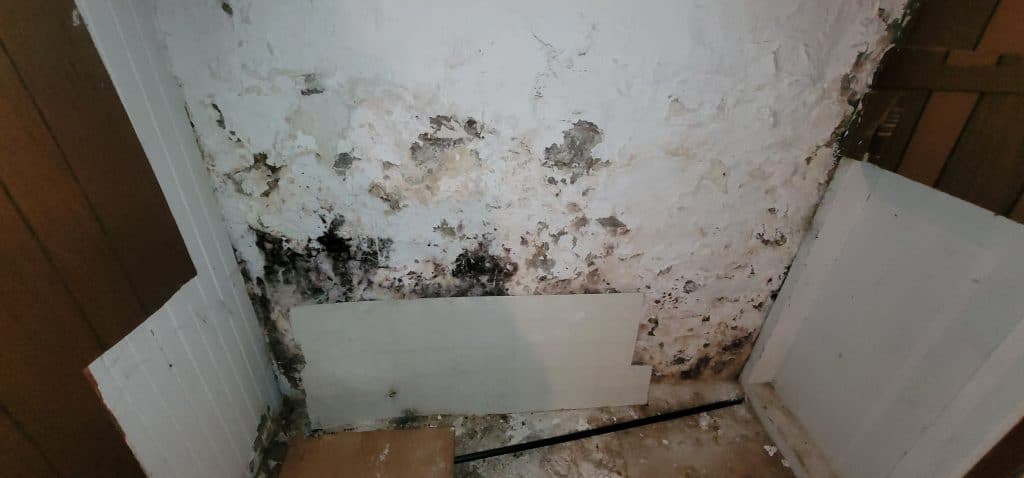
An IICRC-certified technician attends, often the same day you call, and assesses every accessible area with instruments rather than by eye. A thermal imaging camera locates moisture behind walls, ceilings and floors that is not visible. The point of this stage is to find the source, not just the growth.
You get a written proposal setting out what will be removed and what the clearance criteria are. Where an insurance claim is involved, we deal with the insurer directly. The work area is then sealed under negative pressure so that the rest of the property stays unaffected.
Affected porous materials are removed and bagged, surfaces are treated with an antimicrobial, and HEPA air scrubbers run throughout to capture airborne spores rather than let them settle elsewhere.
Clearance testing confirms the air is back within acceptable thresholds. You receive the results, documentation of the work and a prevention plan addressing the moisture source. If testing shows any remaining elevation, we return and do further work at no additional charge — that is our mold-free guarantee, and it applies to every project without exception.
Call 647-956-6121 any time, 24/7, or request a free inspection. We serve Toronto and the Greater Toronto Area.
Reactions vary a great deal between people, and the research on specific health effects is more contested than most websites suggest. What is not contested is that you should not be living with active mould growth indoors, and that people with asthma, allergies or compromised immunity are more likely to react. If anyone in the household has symptoms they think are connected to the property, that is a conversation for their doctor — we remediate buildings, not people.
Not always. If growth is visible and the source is clear, the sensible order is remove first and test after to confirm the result. Pre-testing is more useful when something is suspected but not visible, or when a landlord, buyer or insurer needs it documented.
A contained single-room job is often a matter of days including drying and clearance. Anything involving multiple rooms, structural drying or a significant water source takes longer. You will get a realistic timeframe in the written scope, not on the phone before anyone has seen it.
Whether you need to temporarily move out depends on the location and extent of the mould contamination.
If the affected area is on the same floor as your main living space, temporarily relocating may be recommended until the remediation is complete. If the affected area is on a separate floor, you can often remain in the home, provided proper containment measures are in place.
Our mould remediation process uses negative air pressure containment, also known as an abatement. This setup helps prevent mould spores and contaminated dust from spreading into unaffected areas of the home.
For added protection, we can establish a two-room abatement system:
Work Area: The primary containment area where mould removal takes place and equipment and tools are kept. Negative air pressure helps prevent airborne contaminants from escaping into the rest of the home.
Decontamination Area: A separate room or transition area where workers remove their protective clothing and follow decontamination procedures before exiting the containment zone.
HVAC vents within or near the affected area are sealed as needed to help prevent contamination from spreading through the ventilation system.
These containment measures help keep unaffected areas of the home usable during remediation. However, temporary relocation may still be recommended depending on the severity of the contamination, the location of the affected area, and the household’s specific circumstances.